How judicial foreclosure works in Indiana: the process, your rights, and key deadlines
By Marcus Osei · Updated 2026-06-15
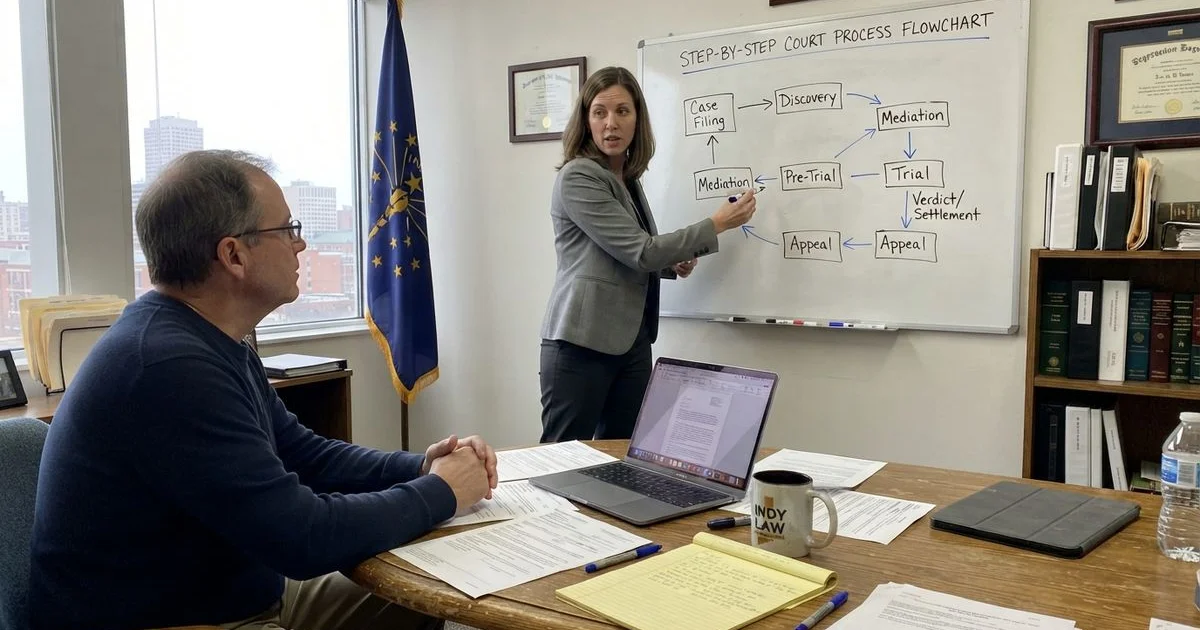
Indiana is a judicial foreclosure state, which means a lender cannot take a home back without first filing a lawsuit and getting a court’s sign-off. That court supervision gives homeowners more built-in opportunities to respond than states that allow foreclosure outside of court. Knowing the stages ahead of time is the difference between reacting in a panic and making a deliberate decision at each step.
This is general information about how the process works, not legal advice for your specific case. Court rules and lender behavior vary, and a licensed foreclosure defense attorney can tell you exactly where your case stands and what deadlines apply to you.
The stages, in order
Missed payments and notice of default. Most servicers wait until a borrower is 90 days or more behind before sending a formal notice of default, though the exact timing depends on the loan and servicer. This letter states the amount owed and gives a window, often 30 days, to cure the default before legal action starts. Once you get a notice of default, the clock on the rest of the timeline starts running.
Pre-suit notice and mediation. Indiana requires lenders to send a settlement conference notice before filing suit on many owner-occupied loans, and the state runs a mediation program aimed at exploring loan modification or other alternatives before the case proceeds. Attending this session, even informally, is one of the most effective things a homeowner can do early.
The lawsuit. If no resolution is reached, the lender files a complaint in county court and has you served. You typically have around 20 to 23 days to file a written answer. Missing that window lets the lender ask for a default judgment, which skips most of the remaining back-and-forth.
Judgment and sale scheduling. If the court rules for the lender, either by default or after a hearing, it enters a judgment and sets a sheriff’s sale date. Indiana law generally requires a waiting period, often around three months, between judgment and sale.
Sheriff’s sale. The property is auctioned at the courthouse in a sheriff’s sale. If no one outbids the lender, the lender typically takes the property back and a sheriff’s deed is later issued to the winning bidder.
What changes the timeline
| Factor | Effect on timeline |
|---|---|
| Contesting the lawsuit | Adds months; the case moves through a full docket instead of a default track |
| Requesting mediation or a loss mitigation review | Can pause the case while the lender evaluates options |
| Filing bankruptcy | Triggers an automatic stay that halts the sale date temporarily |
| Missing the answer deadline | Speeds the case toward default judgment |
| Court backlog in your county | Adds unpredictable delay outside anyone’s control |
Rights you keep during the process
You keep the right to live in the home until the sale is final, the right to respond in writing to the lawsuit, the right to request mediation, and the right to negotiate a loan modification, repayment plan, or short sale at almost any point before the sale, even after a judgment is entered in some cases. None of these rights are automatic protections against losing the home. They are windows to act, and each one closes on a deadline.

What a defense attorney actually does at this stage
A defense attorney checks whether the lender can prove it owns the loan and followed every required notice step, since a missed step can be grounds to slow or dismiss a case. They file the answer on time, show up to mediation prepared with financial documents, and negotiate directly with the servicer’s loss mitigation department, which often responds differently to an attorney than to a homeowner calling alone.
Common mistakes that shorten your window
Ignoring the notice of default because “the bank will call again” is the most common one. So is skipping the mediation session, assuming it will not help. Waiting until a sale date is already scheduled to seek legal help is another: at that point, options like a loan modification review are harder to get approved in time, though emergency motions can sometimes buy a few extra weeks.
If you are early in this process, the most useful next step is usually a conversation with a defense attorney about which stage you are in and which deadline is closest, and what it is likely to cost. The foreclosure defense attorney cost guide breaks down typical fees and what changes the price. You can compare firms that focus on this area of practice through the directory’s ranking method, or start from the homepage to browse attorneys by focus area.
Frequently asked questions
- How long does foreclosure take in Indiana?
- Indiana's judicial process typically runs several months to over a year from the notice of default to a sheriff's sale, depending on court schedules, whether the case is contested, and whether the homeowner requests mediation.
- Can I stay in my home during the foreclosure process?
- Yes. You can generally remain in the home until the sheriff's sale is complete and any redemption period ends, unless a court orders otherwise.
- Do I have to go to court?
- If the lender files a lawsuit, you will be served with a complaint and have a set window to file an answer. Attending hearings or mediation sessions is strongly recommended even if you plan to negotiate rather than litigate.
- What happens if I do nothing?
- If you miss the deadline to respond to a foreclosure complaint, the lender can ask the court for a default judgment, which moves the case toward a sheriff's sale without further input from you.
Related on this site
- Browse foreclosure defense & litigation providers
- What a foreclosure defense attorney costs in Indiana (and what changes the price)
- How to choose a foreclosure attorney: questions to ask and red flags to avoid
- Sued by a debt collector in Indiana? What to expect and how a defense attorney helps
- All guides →